 AjiNova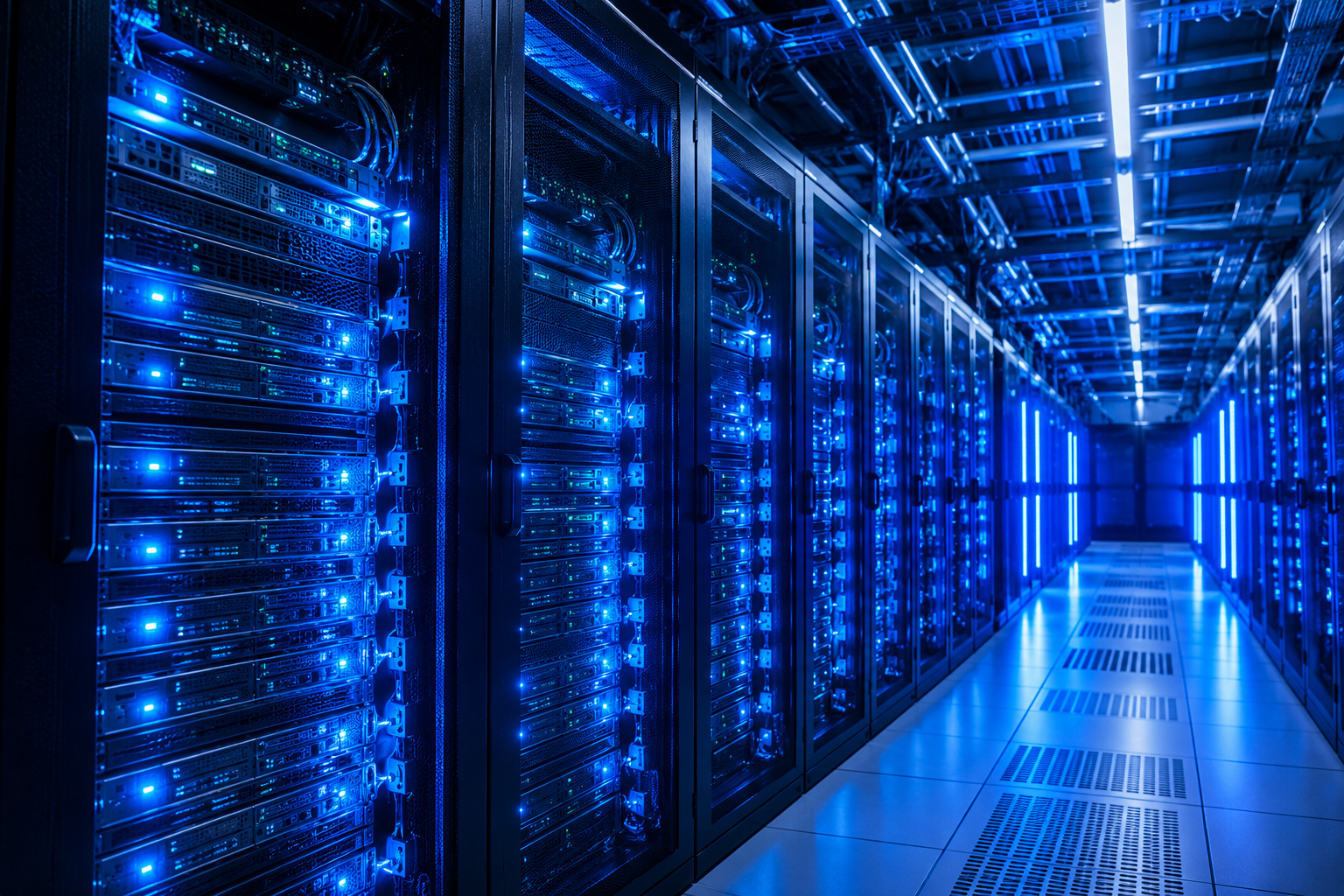
When most people think about artificial intelligence, they picture a chatbot answering questions on a screen. The reality of what is being built right now looks less like software and more like a dam.
OpenAI has locked in contracts for 10 gigawatts of AI computing capacity. The company originally set that target for 2029. It hit the milestone years ahead of schedule. The infrastructure being assembled to get there is unlike anything the technology industry has built before.
What 10 gigawatts actually is
A gigawatt is a unit of power. One gigawatt can supply roughly 750,000 American homes with electricity. Ten gigawatts is 7.5 million homes. That is the entire electricity consumption of a mid-sized country, dedicated entirely to running AI models.
OpenAI's Ohio project alone would see the company become the anchor tenant of a campus capable of drawing 10 gigawatts of power. SB Energy has committed to building at least 9.2 gigawatts of natural gas-powered generation to supply the campus, along with billions of dollars in transmission infrastructure upgrades.
This is not a data center in the traditional sense. It is a power station built specifically to run intelligence.
How the money is structured
The financing behind this is worth understanding because it reshapes how we think about who controls AI.
NVIDIA announced a strategic partnership with OpenAI to deploy at least 10 gigawatts of AI data centers using NVIDIA systems. To support the partnership, NVIDIA intends to invest up to $100 billion in OpenAI progressively as each gigawatt is deployed. The first gigawatt of NVIDIA systems will be deployed in the second half of 2026 on NVIDIA's Vera Rubin platform.
That is separate from the Stargate project, where OpenAI, Oracle, and SoftBank have committed $500 billion to build the same capacity across multiple sites in the United States. Microsoft is contributing $250 billion in Azure cloud services. Amazon is on the hook for $38 billion. AMD agreed to provide GPUs worth $90 billion in potential hardware revenue.
OpenAI is not building one data center. It is signing the entire semiconductor and cloud industry into a single infrastructure bet.
Why this is happening now
The simplest explanation is that AI models keep getting bigger and more capable, and bigger models need more compute to train and run. But there is a second driver that gets less attention: inference.
Training a model is a one-time cost. Running it for hundreds of millions of users every day is ongoing, and the compute cost of serving answers is significant. Sam Altman put it directly: "Compute infrastructure will be the basis for the economy of the future."
OpenAI now has over 700 million weekly active users. Every query costs electricity. The path to profitability runs through owning the infrastructure rather than renting it, which is exactly why the company is building power plants instead of leasing server time.
What this means for everyone else
The infrastructure gap between the largest AI companies and everyone else is widening fast. A startup building on OpenAI's API, or a developer using cloud-hosted models, will be running on infrastructure they do not own and cannot replicate. The companies that control the compute will increasingly control the terms.
For African businesses and developers, the practical implication is that the tools you use are becoming more powerful and cheaper per query as scale increases, but the underlying infrastructure is concentrating into fewer hands than ever. That is a trade-off worth watching.
Need help building software?
Talk to the AjiNova team about web applications, mobile platforms, AI integrations, and cloud solutions.