 AjiNova News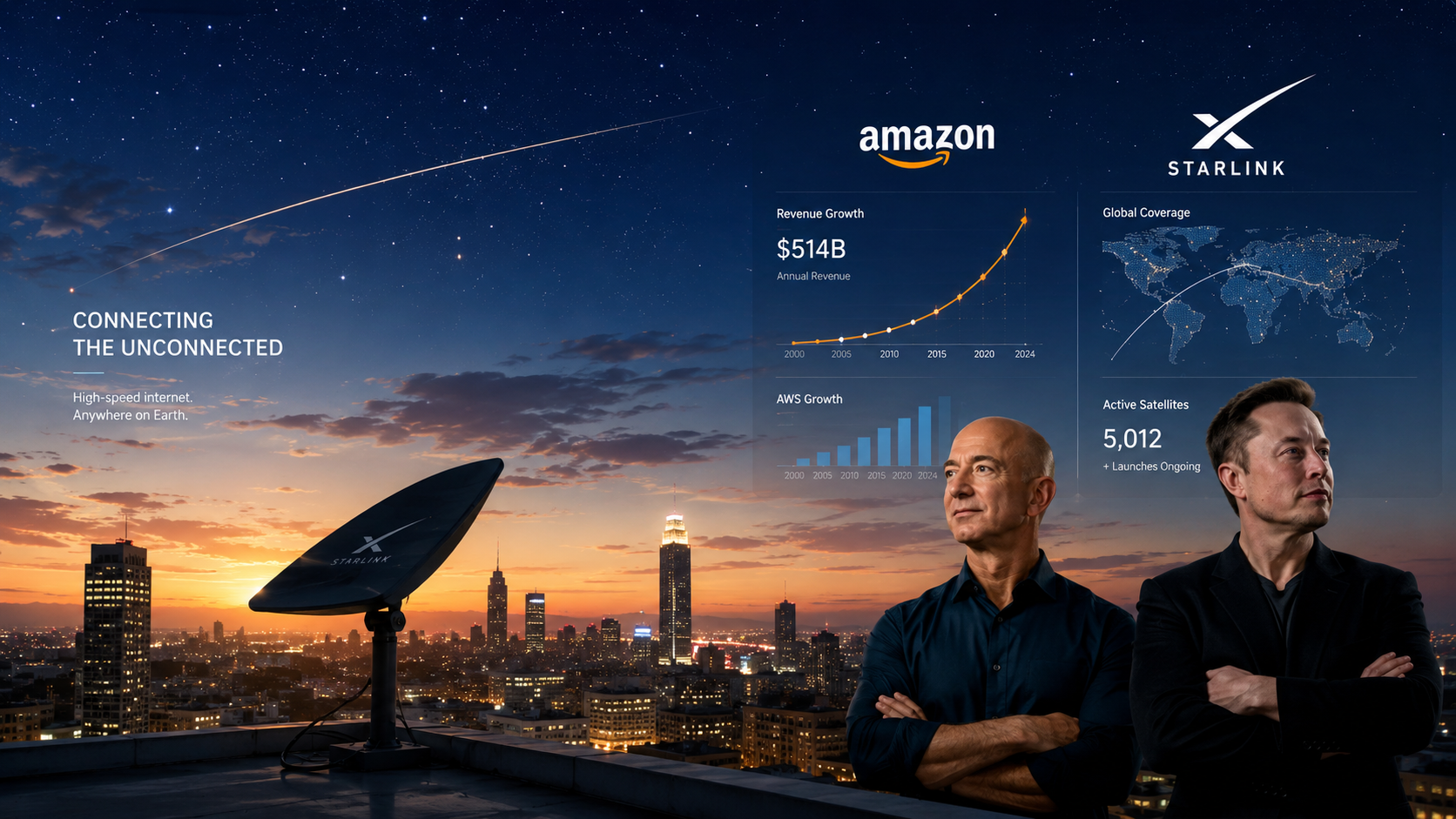
Something quiet happened in the Kenya Gazette on June 5, 2026. A company called Amazon Kuiper Kenya Limited filed an application with the Communications Authority of Kenya for an International Gateway Operator licence. Most people scrolled past it. But underneath that dry regulatory language is one of the most significant internet stories Kenya has seen in years.
Amazon wants to build its first satellite ground station in Africa on Kenyan soil, and it wants a 15-year licence to do it.
What is Amazon Leo and why does it matter?
You may know this project as Project Kuiper. Amazon rebranded it to Amazon Leo in November 2025, though the local subsidiary kept the Kuiper name. The idea has been in development for years: build a constellation of over 3,200 low Earth orbit satellites and use them to beam broadband internet to anyone on the ground, anywhere.
Sound familiar? It should. That is exactly what Starlink does.
The difference is who is behind it. This is Jeff Bezos against Elon Musk, Amazon against SpaceX, and Kenya just became the battleground.
Why Kenya specifically?
Kenya was not a random choice. Amazon has been building toward this for most of 2026. In April, the company applied for a Network Facilities Provider Tier 2 licence that would allow it to operate telecom infrastructure across the country. Meetings followed with officials in the ICT ministry. By June, the ground station application landed in the Gazette.
Kenya makes sense for several reasons. It already hosts one of the most advanced digital economies on the continent. Nairobi has fibre, data centres, and a growing tech sector. The country also has a government that has been vocal about closing the digital divide, particularly in rural areas where terrestrial internet remains expensive or nonexistent.
Starlink figured this out first. It entered Kenya in July 2023 with 405 subscribers. By December 2025 that number had grown to roughly 22,000, making it the eighth largest internet provider in the country. When Starlink opened a ground station in Nairobi in January 2025, latency dropped from 296 milliseconds to 39 milliseconds overnight. That single infrastructure decision made a tangible difference to anyone using it for video calls or remote work.
Amazon watched. Now it wants to do the same thing, and it wants to do it bigger.
What Amazon Leo is promising
Amazon has been pitching download speeds of up to 400 Mbps for standard home terminals, compared to Starlink's 150 Mbps. For commercial setups, it claims up to 1,280 Mbps against Starlink's 400 Mbps. Pricing has not been announced for Kenya yet, though analysts expect it to be competitive with what Starlink charges.
The ground station is the key piece. A satellite gateway is where signals from orbit come down to earth and get converted into regular internet traffic that flows through existing networks to users. The closer that station is to you, the lower your latency and the faster your connection feels. Building one in Kenya means Amazon Leo users here will not be routing their traffic through ground stations in Europe or the Middle East.
Amazon is applying for a 15-year licence, which tells you this is not a test run. This is a long-term infrastructure bet.
What it means for Kenyans
Competition is almost always good for consumers. Starlink currently dominates the high-speed segment in Kenya, accounting for more than half of all connections above 100 Mbps. That kind of market concentration gives them room to hold prices where they are.
A serious competitor changes that calculation. If Amazon Leo launches in Kenya with comparable or better speeds at lower prices, Starlink will have to respond. That pressure is exactly what rural households and small businesses in underserved areas need, because right now the barrier to satellite internet is mostly about cost.
"Satellite broadband will be critical in bridging the digital divide, supporting digital government services, enabling remote learning, strengthening healthcare delivery, and unlocking opportunities for youth and enterprises across the country."
PS Tanui, Principal Secretary, ICT Ministry of Kenya
What still has to happen
Nothing is guaranteed yet. The Communications Authority of Kenya has to review and approve the application. That process takes time, and approvals are never automatic. Amazon also cleared a similar hurdle in Nigeria in January 2026, where it was granted a seven-year operating licence, so there is precedent for African regulators engaging seriously with this application.
Assuming approval comes through, Amazon still has to physically build the ground station, bring the hardware in-country, and complete its satellite launches before any Kenyan user can actually subscribe. The company is targeting a commercial launch of the broader Amazon Leo network for 2025 to 2026, with African markets included in the early rollout.
So no, you cannot sign up today. But the paperwork is in, the infrastructure decisions are being made, and the race for Kenya's satellite internet market is now officially between two of the most well-funded companies on earth.
Enjoyed this article?
Help AjiNova continue publishing insightful stories about technology, AI, startups, and innovation. Every contribution makes a difference.
Voluntary contribution · Choose your amount
Need help building software?
Talk to the AjiNova team about web applications, mobile platforms, AI integrations, and cloud solutions.