 AjiNova News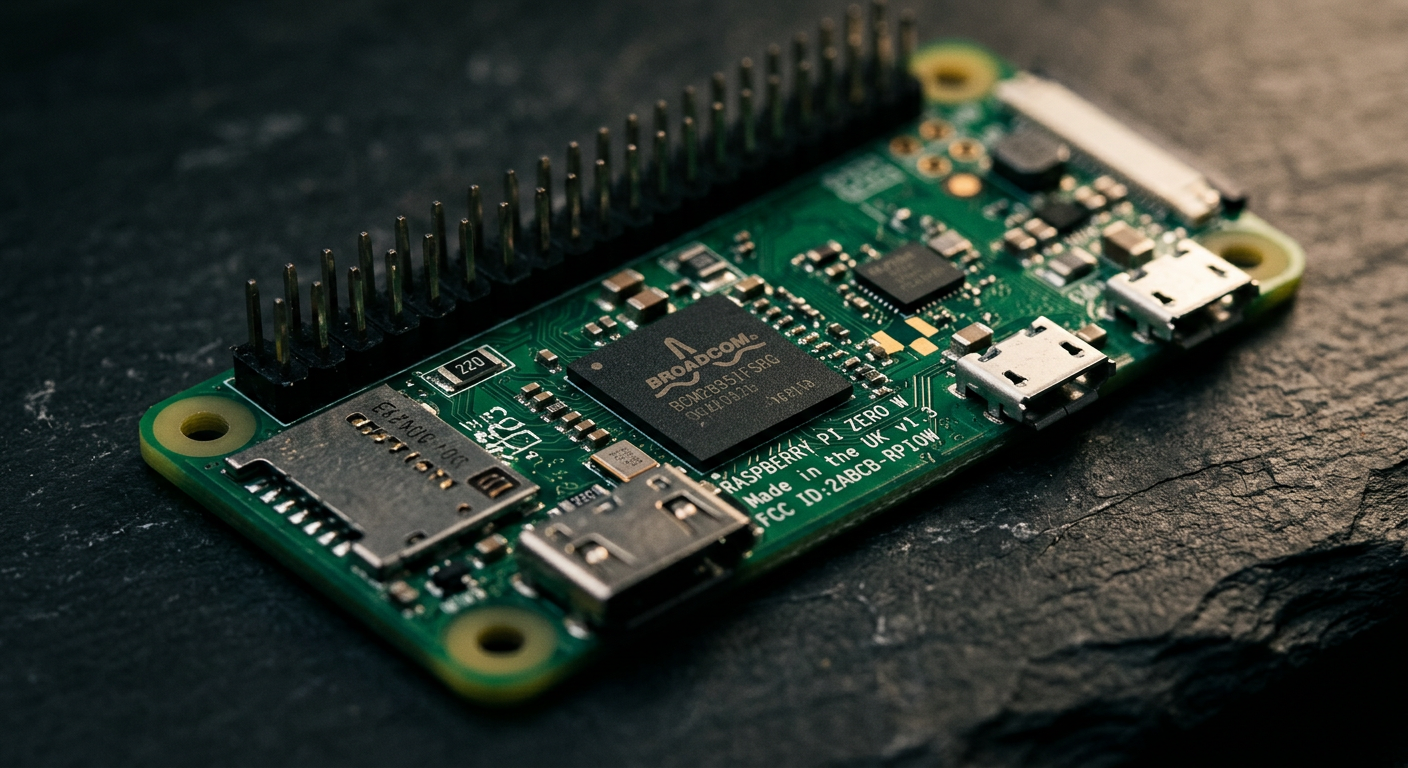
Edwin Nguthiru had a problem with the AI industry's assumptions.
The dominant narrative repeated in boardrooms in San Francisco, in investment memos from London VCs, and in government policy documents from Nairobi to Accra, goes something like this: AI is expensive. Building meaningful AI infrastructure requires massive data centres, GPU clusters that cost tens of thousands of dollars per unit, and power consumption that would embarrass a small country. Africa, by extension, needs to either import AI from elsewhere or wait until the infrastructure catches up.
Nguthiru, founder of Nairobi-based Aphorion Labs, decided to test that assumption. Then he broke it.
At AI Everything Kenya x GITEX Kenya 2026, held at the Kenyatta International Convention Centre in Nairobi last month, Aphorion Labs demonstrated HeatherDB, what the company describes as the world's first natively intelligent database. The demonstration involved running production-grade AI workloads on a Raspberry Pi and a five-dollar server.
Not a proof of concept. Not a simplified toy model. Production-grade workloads. On hardware that costs less than a plate of nyama choma.
What "Natively Intelligent Database" Actually Means
Traditional databases store data. When you want to do something intelligent with that data - run an AI model, ask it a question in natural language, have it spot patterns - you typically have to pull the data out, push it through a separate AI system, and then push the results back.
HeatherDB collapses that gap. The intelligence lives inside the database itself, built on what Aphorion calls "storage-shaped intelligence." The idea is that by designing the AI around the constraints of how data is actually stored and retrieved rather than designing a separate AI system and bolting it on - you can achieve comparable performance at a fraction of the computational cost.
The practical result of this design philosophy is the five-dollar server. If your AI can operate efficiently with the data architecture rather than fighting it, you don't need the same processing horsepower that traditional approaches demand.
Why This Matters for Africa Specifically
Access to computing infrastructure is one of the most persistent bottlenecks in African technology development. Cloud computing has helped a startup in Eldoret can now rent server time from AWS rather than buying physical hardware but it comes with costs, latency considerations, and a degree of dependency on infrastructure that sits thousands of kilometres away.
More fundamentally, the high compute requirements of frontier AI have meant that the most capable AI systems are built in places that already have the most infrastructure: the United States, China, Europe. Africa has been, as Nguthiru himself put it at the event, "a consumer of AI built elsewhere."
If HeatherDB's approach holds up at scale, it opens a different path. A database that can run meaningful AI workloads on low-cost commodity hardware means that a health clinic in Kisumu doesn't need a cloud contract to use an intelligent records system. It means a sacco in Meru could run AI-powered fraud detection on hardware they already own. It means the entry cost for AI-powered software drops in a way that matters enormously in markets where margins are thin and infrastructure is patchy.
The Broader GITEX Kenya Picture
Aphorion Labs wasn't the only Kenyan startup at GITEX making serious noise.
Signvrse, another Nairobi company, demonstrated an AI-powered sign language accessibility platform that uses 3D avatars, speech recognition, and natural language processing to help Deaf and hard-of-hearing communities access healthcare, government services, and education. The startup had already been selected into Google.org's Generative AI Accelerator cohort in 2025 - a meaningful endorsement of both the technology and the team.
Joritu is applying AI planning and coordination tools to the construction sector - one of Kenya's largest industries, and one that remains deeply under-digitised. AuraLearn, launched at the same event, converts complex visual content like STEM diagrams and economics charts into interactive spatial audio for visually impaired students.
These aren't companies building AI for Silicon Valley. They're building AI for the specific textures of life in East Africa - the languages, the infrastructure gaps, the sectors that most global AI companies haven't thought hard about because there's no obvious IPO at the end of the road.
Kenya attracted $1.04 billion in tech investment in 2025, a 72% year-on-year surge. More than 100 investors from over 20 countries attended the GITEX Kenya summit, collectively managing more than $50 billion in assets. The money is starting to follow the ideas.
The Question Worth Sitting With
There's an obvious caveat to all of this. Demonstration-day performance and real-world production performance are different things. HeatherDB running on a $5 server at a conference is impressive. HeatherDB running reliably at scale, under real load, with messy data, in a production environment - that's a harder test, and it hasn't been publicly documented yet.
Nguthiru and Aphorion Labs know this. The conference demonstration was the beginning of a conversation, not the end of one.
But the question the demonstration raises is worth sitting with regardless of how the engineering ultimately proves out: what else have we assumed was impossible because we built the constraints of expensive infrastructure into the foundations of our thinking?
Africa has a long history of solving problems in resource-constrained environments in ways that turn out to be better solutions even in resource-rich ones. M-Pesa happened here. Mobile-first web development as a default happened here.
Maybe the next chapter of what affordable, accessible AI actually looks like starts here too.
Enjoyed this article?
Help AjiNova continue publishing insightful stories about technology, AI, startups, and innovation. Every contribution makes a difference.
Voluntary contribution · Choose your amount
Need help building software?
Talk to the AjiNova team about web applications, mobile platforms, AI integrations, and cloud solutions.