 AjiNova News
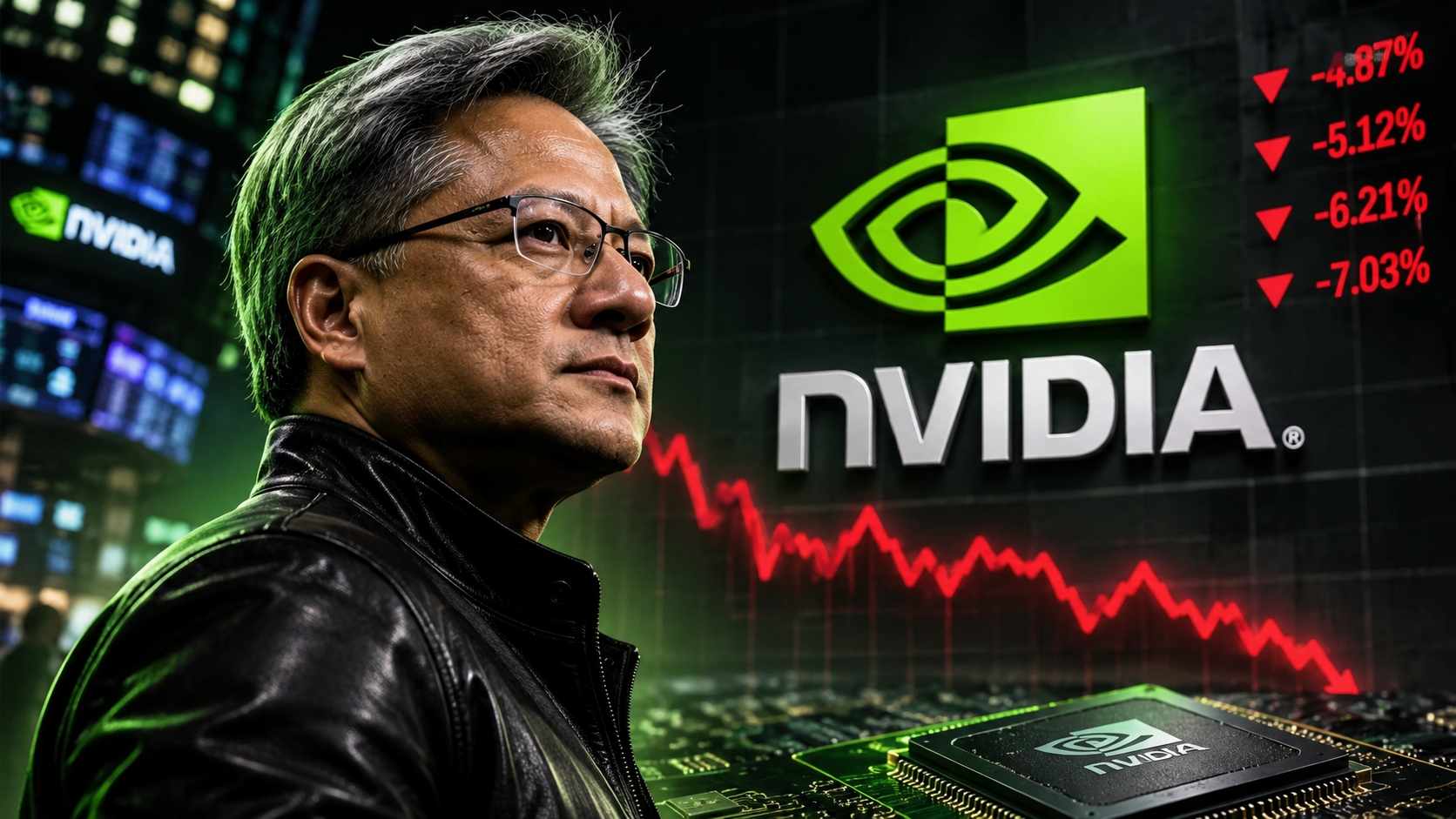
Jensen Huang Resigns as NVIDIA CEO After 33 Years as AI Chip Giant Faces Leadership Crisis
NVIDIA co-founder Jensen Huang has stepped down as president and CEO with immediate effect. CFO Colette Kress will take over as interim chief executive as the company begins searching for a permanent successor.
NVIDIA has officially announced the resignation of Jensen Huang, bringing an end to more than three decades of leadership at one of the world's most influential technology companies.
The company's board of directors confirmed on Thursday, November 12, 2026, that Huang had resigned as President, Chief Executive Officer and a member of the board, effective immediately.
Colette Kress, NVIDIA's Executive Vice President and Chief Financial Officer, has been appointed interim CEO. She will retain her finance responsibilities while the board searches for a permanent replacement.
The announcement marks a major turning point for NVIDIA, whose graphics processing units (GPUs) have become essential infrastructure for artificial intelligence development, data centres and advanced computing.
Why Did Jensen Huang Resign?
Huang's departure follows days of growing controversy surrounding reports about his personal relationships and questions about his leadership.
Reports by The Wall Street Journal and other international media outlets described allegations involving two extramarital relationships, including one involving a woman identified in reports as Alice Huang, who was alleged to have connections to Chinese intelligence.
NVIDIA's board had initiated an investigation into the matter, reportedly involving an external law firm. The allegations also attracted attention because of the company's strategic importance in the global semiconductor industry and the sensitive nature of advanced chip exports to China.
Huang previously acknowledged being unfaithful to his wife, according to reporting by The Guardian.
However, allegations concerning espionage and the involvement of foreign intelligence services should not be treated as established facts. The precise circumstances surrounding the reported relationships and any alleged intelligence connections remain matters of investigation.
NVIDIA has not publicly established that the allegations of espionage are true.
Colette Kress Takes Over as Interim CEO
With Huang's departure, responsibility for leading NVIDIA temporarily moves to Colette Kress.
Kress joined NVIDIA in September 2013 and has served as Executive Vice President and Chief Financial Officer for more than a decade.
Her appointment provides the company with an experienced executive who understands its financial operations, business strategy and relationships with major customers and investors.
She will continue performing her CFO duties while serving as interim CEO.
NVIDIA's board has also appointed longtime director Harvey C. Jones as its first-ever chair. The board says it will consider both internal and external candidates when selecting a permanent chief executive.
The transition raises an important question: can NVIDIA maintain its current strategic direction without the founder who has led the company since its early years?
Why Jensen Huang's Departure Matters to the AI Industry
Huang is widely regarded as one of the central figures behind the modern artificial intelligence boom.
Under his leadership, NVIDIA evolved from a graphics-chip manufacturer primarily associated with gaming into a dominant supplier of specialised computing hardware used to train and operate advanced AI systems.
Its GPUs power data centres operated by major technology companies, research institutions and cloud service providers.
The company has benefited enormously from increasing demand for AI computing capacity, with its hardware becoming a critical component of the infrastructure supporting generative AI.
AjiNova previously examined NVIDIA's growing financial influence in the artificial intelligence sector in its article, Nvidia Just Offered to Guarantee $250 Billion for OpenAI.
That report highlighted how NVIDIA's influence extends beyond selling processors, with the company increasingly involved in financing and supporting the infrastructure built around its hardware.
Huang's departure therefore has implications beyond the company's executive structure. Investors, technology companies and AI developers will be watching closely to determine whether NVIDIA can maintain its momentum during the leadership transition.
Investors React as NVIDIA Shares Come Under Pressure
The announcement has unsettled investors, with NVIDIA shares falling sharply following reports and confirmation of Huang's departure.
The company's valuation and market performance are closely connected to expectations about continued growth in artificial intelligence spending.
Investors have long associated NVIDIA's success with Huang's leadership, particularly his ability to anticipate demand for specialised computing hardware and position the company at the centre of the AI infrastructure market.
His departure creates uncertainty around future strategic decisions, including product development, major partnerships, investments and the company's long-term approach to international markets.
However, NVIDIA remains a large technology business with established engineering teams, customers, manufacturing partners and a substantial product ecosystem.
The immediate challenge for its board is to ensure that the leadership transition does not disrupt operations or undermine confidence among investors and customers.
The Bigger Picture: Who Controls the Future of AI Computing?
NVIDIA's leadership crisis arrives at a time when competition for AI computing infrastructure is intensifying.
Technology companies are committing enormous sums to data centres, specialised processors, electricity supply and cloud infrastructure.
In an earlier AjiNova report, The AI Data Centre Race Is Getting Bigger — But Power, Cost and Infrastructure Could Slow It Down, we examined how the expansion of AI is creating unprecedented demand for computing resources.
NVIDIA occupies a central position in this ecosystem because its processors are used across much of the infrastructure powering advanced AI applications.
The company's future leadership will therefore influence decisions that extend well beyond its own employees and shareholders.
The development also connects with the broader investment story explored in OpenAI Is Building a Power Plant for AI, which explains why AI companies are investing heavily in the electricity and computing capacity required to support increasingly powerful systems.
The semiconductor industry is also experiencing major changes as demand for specialised chips and high-bandwidth memory increases. AjiNova explored another side of this development in AI Chips Are Making Samsung Richer Than Ever.
Together, these developments demonstrate how leadership decisions at major technology companies can have consequences throughout the global AI supply chain.
What Happens to NVIDIA Next?
NVIDIA's immediate priority will be managing the transition and identifying a permanent CEO.
The board will need to find a leader capable of maintaining the company's technological advantage while navigating competition, international trade restrictions, investor expectations and the rapidly changing AI market.
The company has also confirmed that its third-quarter fiscal 2027 financial results will be released on November 17, 2026, as previously scheduled.
That announcement will provide investors with an opportunity to assess the company's financial performance and hear more about its outlook during an unusually difficult period.
For now, Colette Kress will oversee the company while the board conducts its search.
A Defining Moment for NVIDIA
Jensen Huang's resignation marks the end of an extraordinary leadership era.
For 33 years, he helped transform NVIDIA from a relatively specialised graphics-chip company into one of the most important businesses in the global technology industry.
His departure creates uncertainty, but it also presents an important test of NVIDIA's institutional strength.
The question is no longer simply whether NVIDIA can continue producing the chips powering the AI revolution. It is whether the company can preserve its strategic direction, investor confidence and competitive advantage without the founder who guided its transformation.
The answer will become clearer as the board identifies a permanent successor and the company navigates its next chapter.
AjiNova will continue following developments surrounding NVIDIA's leadership transition and its implications for the global artificial intelligence industry.
Sources: NVIDIA's official announcement, The Guardian, The Wall Street Journal and Reuters.
Enjoyed this article?
Help AjiNova continue publishing insightful stories about technology, AI, startups, and innovation. Every contribution makes a difference.
Voluntary contribution · Choose your amount
Need help building software?
Talk to the AjiNova team about web applications, mobile platforms, AI integrations, and cloud solutions.