 AjiNova News
The AI Data Centre Race Is Getting Bigger — But Power, Cost and Infrastructure Could Slow It Down
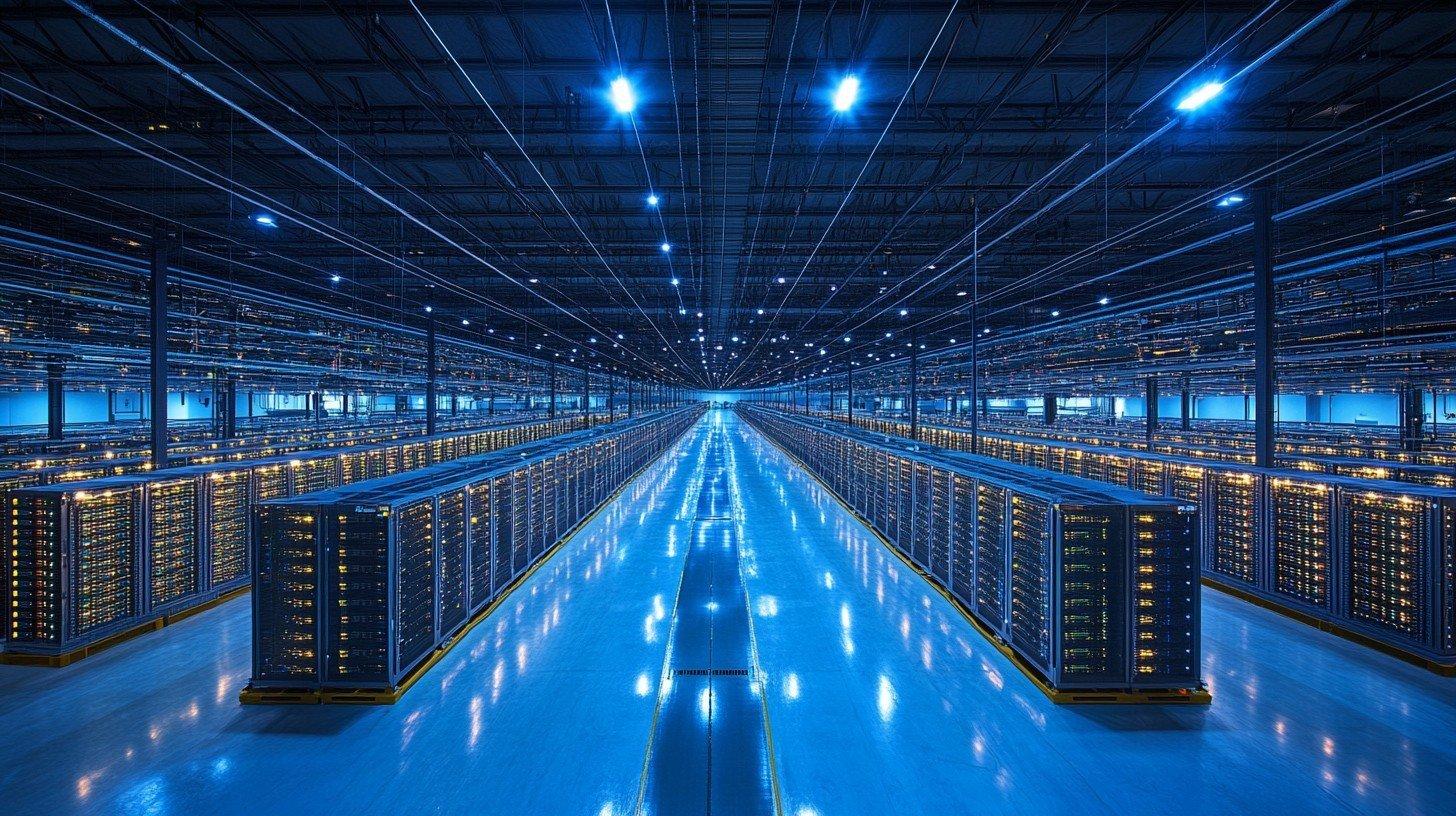
Artificial intelligence is often presented as a software revolution. Yet behind every chatbot response, AI-generated image and automated coding task is a physical system that requires processors, memory, networking equipment, electricity and cooling.
That infrastructure is becoming one of the most important parts of the AI industry.
On October 19, 2026, Reuters reported that AI infrastructure developer Nscale was in talks with Anthropic, the company behind Claude, over a potential additional deal worth approximately $45 billion for computing capacity. The discussions concern a second facility at Nscale’s Monarch data-centre campus in West Virginia. The report said the proposed building could deliver 460 megawatts of computing capacity using NVIDIA’s Vera Rubin chips.
The negotiations are ongoing, and the reported deal is not a completed transaction. However, the scale of the discussions illustrates how much computing infrastructure major AI developers believe they may need.
Read Reuters’ report on the potential Anthropic–Nscale deal.
Why AI companies need so much computing power
Traditional cloud applications usually scale by adding computing resources as demand grows. AI services can also scale this way, but training and running advanced models introduces additional demands.
Training a large model can require many specialised processors working together for extended periods. Once a model is available to users, every request consumes computing resources too. As usage increases, providers must allocate more capacity to serve requests reliably and quickly.
The exact amount of computing required varies with the model, workload, hardware and efficiency of the software. A small text-classification model, for example, may require considerably fewer resources than a large model generating long responses or analysing complex documents.
Three infrastructure requirements are particularly important:
- Accelerators and memory: AI workloads depend on processors capable of performing large numbers of mathematical operations, along with enough high-bandwidth memory to keep those processors supplied with data.
- Networking: Large AI workloads may be distributed across many machines. Moving data efficiently between those machines is essential to performance.
- Power and cooling: High-density computing equipment consumes electricity and produces heat. Data centres need suitable electrical connections, cooling systems and operational controls to keep equipment running reliably.
This is why AI infrastructure is no longer simply a question of purchasing more servers. It also involves construction, energy planning, hardware supply chains, networking and long-term operating costs.
The $45 billion question: what does a deal of this size actually mean?
The potential Anthropic–Nscale arrangement is significant because it points to the growing role of specialised AI cloud providers.
Rather than building every facility themselves, AI companies can contract with infrastructure providers that supply access to processors, data-centre space and related services. This approach can give an AI developer access to capacity without having to manage every aspect of the physical infrastructure.
However, a large contract value should not automatically be interpreted as immediate cash expenditure or completed infrastructure. The precise commercial terms, delivery schedules and conditions matter. A proposed deal may cover computing capacity delivered over time, and negotiations can change before an agreement is finalised.
For cloud providers, large contracts can create predictable demand and justify investments in facilities and equipment. For AI developers, they can help secure access to resources that may be difficult to obtain on short notice.
There is also a financial risk. Building data centres requires substantial capital, while the commercial returns depend on future demand, utilisation, pricing and operating costs.
Reuters has also reported that investors are scrutinising the debt associated with AI infrastructure expansion. In the same October 19 report, it noted concerns around rival provider CoreWeave’s debt burden and delays affecting a separate Nscale project after Microsoft withdrew from an agreement.
These developments do not mean that AI demand is disappearing. They show that strong demand alone does not remove the practical and financial risks of delivering infrastructure.
Electricity is becoming a strategic technology resource
A data centre can have the latest processors and excellent software, but it cannot operate without a reliable power supply.
Large computing facilities need electrical capacity not only for servers but also for cooling, networking and supporting systems. Connecting a new facility to the grid can require planning, infrastructure upgrades and coordination with electricity providers.
That creates a potential mismatch: computing demand may grow quickly, while power infrastructure takes longer to build and connect.
The challenge extends beyond the United States. Countries looking to attract cloud and AI investment need reliable electricity, connectivity, appropriate sites, skilled technicians and clear regulatory processes. The details differ by location, but the underlying engineering requirements are similar.
For African technology markets, the discussion is particularly relevant because infrastructure decisions affect the cost and availability of digital services. Businesses may not need to operate their own data centres to feel the impact; they may experience it through cloud pricing, service availability and the cost of AI-powered software.
AjiNova has previously examined the relationship between AI capability and infrastructure in its coverage of a Nairobi startup running production AI on low-cost hardware. That example highlights a complementary engineering question: rather than only asking how much infrastructure can be built, developers should also ask how much useful work can be delivered with the resources available.
Why the cheapest AI model is not always the cheapest solution
When businesses adopt AI, the price per API request is only one part of the total cost.
A more complete calculation includes:
- Model inference and token usage.
- Data storage and retrieval.
- Network transfer and latency.
- Monitoring, logging and security.
- Human review and error correction.
- Engineering time spent integrating and maintaining the system.
A cheaper model can be more expensive in practice if it needs many retries, produces unreliable results or requires extensive human intervention. Conversely, a smaller model can be an excellent choice for predictable tasks such as document classification, routing support requests or extracting structured information.
Businesses should measure the cost per successful task, not just the cost per request.
They should also test whether a workload genuinely needs a large model. Some applications can use a smaller model for routine requests and reserve more capable models for tasks that require deeper reasoning. Caching repeated answers, limiting unnecessary context and processing suitable tasks in batches can also reduce infrastructure demand.
The best architecture depends on the workload, accuracy requirements, latency targets and sensitivity of the data.
What cloud engineers and businesses should do next
The expansion of AI infrastructure creates opportunities, but it also makes disciplined engineering more important.
For developers, begin with workload measurements. Record latency, error rates, token consumption and the proportion of requests that actually require the most capable model. Test performance with representative data rather than relying exclusively on vendor demonstrations.
For startups, avoid building a business model around unlimited access to cheap computing. Set budgets, monitor usage and estimate how costs would change if traffic increased fivefold or tenfold. Consider fallback providers where appropriate, but assess the complexity and security implications of multi-provider systems.
For IT teams, treat AI infrastructure as a reliability concern. Define service-level objectives, test failure scenarios and establish limits on automated workloads. A service that works during a small pilot may behave differently when thousands of users interact with it simultaneously.
A useful starting point is to understand the broader economics of AI platforms. AjiNova’s analysis of Databricks and the growing value of AI infrastructure explores why the systems supporting AI can be commercially important alongside the models themselves.
Will the AI infrastructure boom continue?
The latest negotiations suggest that major AI developers continue to seek substantial computing capacity. But the long-term direction of the industry will depend on more than demand forecasts.
Hardware availability, power connections, construction timelines, financing costs, model efficiency and customers’ willingness to pay will all influence which projects succeed.
More efficient models and software could reduce the amount of computing required for some tasks. At the same time, lower costs can make AI useful in additional products and increase overall demand. The relationship between efficiency and total infrastructure consumption is therefore not straightforward.
The key lesson is that AI is both a software industry and an infrastructure industry. The companies that manage the relationship between computing capacity, energy, cost and useful output will be better positioned to deliver reliable services.
For developers and businesses, the practical response is not to chase the largest model or the biggest infrastructure announcement. It is to build systems that deliver measurable value, use resources efficiently and remain reliable as demand grows.
References
- Reuters — Nscale and Anthropic in talks for a new $45 billion AI cloud deal — October 19, 2026.
- Financial Times — America’s $10tn AI infrastructure boom is starting to fray — October 2026.
- AjiNova — Databricks’ $188 billion valuation and the AI infrastructure market.
- AjiNova — Production AI on a $5 server in Nairobi.
Enjoyed this article?
Help AjiNova continue publishing insightful stories about technology, AI, startups, and innovation. Every contribution makes a difference.
Voluntary contribution · Choose your amount
Need help building software?
Talk to the AjiNova team about web applications, mobile platforms, AI integrations, and cloud solutions.