 AjiNova News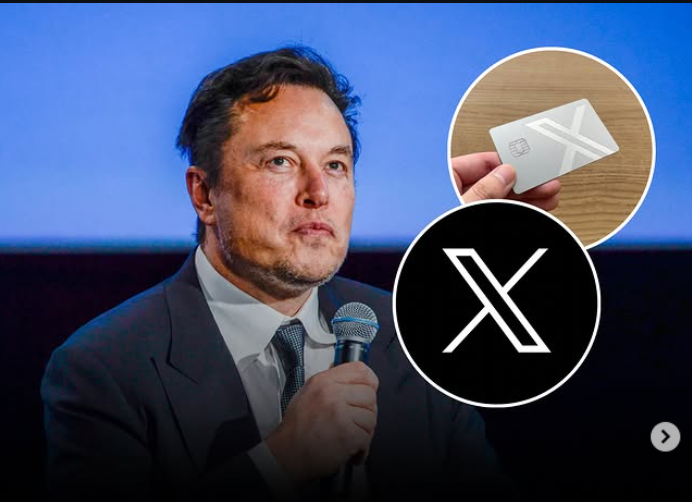
Elon Musk has been talking about turning X into an everything app for three years. On June 25, 2026, that vision stopped being a talking point and started being a product you can download and use.
X Money is live. Not in limited internal testing, not in a regulatory filing, not in a congressional hearing — live, in the hands of Premium+ subscribers across the United States, with a metal debit card, peer-to-peer transfers, a savings yield that embarrasses most banks, and an FDIC insurance ceiling that embarrasses most banks even more.
Within hours of the launch, a user sent $25 directly to Musk's X account. Musk confirmed the payment publicly. It was, in its own slightly theatrical way, a proof of concept: money moving peer-to-peer inside a social media post, as naturally as a like or a repost.
That moment is either the beginning of something genuinely transformative in how Americans think about money, or the most expensive marketing stunt in fintech history. The evidence currently points toward the former.
What X Money Actually Offers
Start with the headline number, because it's the one that stops people mid-scroll: 6% APY on deposits. No minimum balance. No lock-in period.
To put that in context — the national average savings account rate in the United States as of mid-2026 sits at approximately 0.6%. High-yield savings accounts at the most competitive online banks offer somewhere between 4.5% and 5.2%. X Money's 6% isn't just competitive. It's the highest yield available on a federally insured product from a mainstream consumer financial service.
Beyond the yield, the full X Money offering breaks down like this:
A custom metal Visa debit card, personalised to your X handle, accepted anywhere Visa is accepted globally. No foreign transaction fees. Free ATM withdrawals. The kind of card that signals "this is a real financial product" rather than a prepaid afterthought.
Peer-to-peer payments to any X account — not just Premium subscribers. You can send money to any X user, which immediately gives X Money a distribution advantage that took Venmo and Cash App years to build. X begins with a social graph of over 600 million users. Payments become native to a network that already exists.
Full banking functionality — the ability to pay rent, send a wire transfer, mail a physical cheque, or split a bill with friends, all from inside the same app where you read the news and post your opinions.
FDIC insurance up to $10 million through X's Cash Sweep Program, which spreads deposits across multiple FDIC-member partner banks. Standard FDIC coverage caps at $250,000 per depositor per institution. The sweep structure multiplies that ceiling by 40. For anyone who has ever worried about keeping large balances in a single bank, that number is remarkable.
The service is secured with passkeys, and account holders' funds are automatically enrolled in the X Cash Sweep Program that provides access to up to $10 million of FDIC insurance.
The Bank Behind It All
X is not a bank. That's important to understand clearly.
X Money is built on Cross River Bank's infrastructure — a Fort Lee, New Jersey-based FDIC member institution that has long worked behind the scenes with fintech companies, providing the regulated banking rails that power consumer-facing products.
You see the X brand, the X handle on the debit card, the payment button inside the app. Cross River carries the regulated banking role — the deposits, the compliance, the FDIC membership. That arrangement is the same structure Apple used with Goldman Sachs for Apple Card, and the same model behind dozens of consumer fintech products most people use without knowing who actually holds their money.
The practical implication for consumers: your money is in a legitimate, federally regulated bank. X is the interface. Cross River is the vault.
X holds money transmitter licences in more than 40 US states through its subsidiary X Payments, with Visa as a partner for account funding and instant transfers. The remaining states are still pending approval, which means access isn't yet universal across the country.
The Rollout: Who Can Get It Right Now
The current launch is controlled. Dhruv Batura, head of X Money, announced the release to "a subset of US Premium+ users to collect feedback and iron out issues ahead of a broader launch."
Premium+ is X's top subscription tier. The gating is deliberate — rolling out a financial product to hundreds of millions of users simultaneously without stress-testing the infrastructure would be the kind of mistake that ends companies. Starting with Premium+ subscribers, who already have verified payment relationships with X, gives the engineering and compliance teams a controlled environment to identify problems before they become headlines.
US residents 18 and older with accounts in good standing can request access, according to the product terms, with a wider expansion expected to follow. The broader launch timeline hasn't been announced, but the pace of the rollout suggests a full consumer launch before the end of 2026.
International expansion — specifically the United Kingdom and the European Union — is planned for later this year, though the regulatory pathway in Europe is considerably more complex given MiCA requirements and the specific treatment of yield-bearing products under EU financial law.
The Competitive Threat Is Real
PayPal has been the default for online payments for two decades. Venmo built the peer-to-peer payments category among millennials. Cash App disrupted both by adding investing, Bitcoin trading, and a debit card to the mix.
X Money enters this market with structural advantages none of those platforms had at launch.
Distribution. Cash App and Venmo had to acquire users one by one, relying on word of mouth and network effects to build their payment graphs. X begins with 600 million existing users and a social network where money transfers are a natural extension of conversations already happening.
The yield. At 6% APY, X Money gives people a concrete financial reason to move money onto the platform and keep it there. Venmo's balance earns nothing by default. Cash App's savings feature offers significantly less. X Money is designed to make parking cash on the platform feel like a financial decision, not just a convenience.
The timing. X Cashtags drove $1 billion in global trading volume soon after their debut — evidence that the platform's audience already has an appetite for financial activity inside X. X Money formalises and deepens that appetite with a regulated product.
The question isn't whether X Money will find users. It's whether it can handle them — whether the compliance infrastructure, fraud review, customer support, and banking disclosures that financial services require can be delivered at scale by a company whose recent history has involved significant operational turbulence.
The Political Dimension That Won't Go Away
X Money's launch hasn't arrived without scrutiny.
In April, Senator Elizabeth Warren wrote to Musk directly, raising concerns about the launch of X Money just one year after Musk helped dismantle the Consumer Financial Protection Bureau — the agency responsible for policing exactly this kind of financial product.
Warren's letter asked pointed questions: what the launch date was, what the 6% APY was actually backed by, whether Cross River Bank was indeed the partner institution, and whether X Money intended to integrate crypto through a stablecoin that would exploit carve-outs in the GENIUS Act for private companies.
Those questions haven't been answered publicly. The stablecoin integration remains on the roadmap but unconfirmed for the current launch. And the CFPB — the watchdog designed to protect consumers from exactly the kinds of financial products X Money resembles — has been significantly weakened in the period since Musk's involvement with the previous administration.
Whether that regulatory environment is a cause for concern or a feature of the landscape that X Money navigated deliberately is, at this point, a matter of perspective.
The 25-Year Circle
There is a detail in X Money's story that Musk himself has pointed to: this is, in some sense, a return.
Before Twitter, before Tesla, before SpaceX, Musk co-founded X.com in 1999 — an online financial services company that later merged with Confinity to become PayPal. He was pushed out of PayPal in 2002. He sold his stake, made his fortune, and spent the next two decades building rockets and electric cars.
In 2022, he bought Twitter and immediately renamed it X. In 2026, he launched X Money. The original vision of X.com — a single platform handling your social life and your financial life simultaneously — is now, 25 years later, actually here.
Whether X Money becomes the everything app Musk has always said he was building, or whether it runs into the regulatory, security, and trust challenges that have tripped up every previous attempt to make a social network into a bank — that story hasn't been written yet.
What was written this week, by a user sending $25 to Musk and Musk confirming it on a platform seen by millions, is that the product is real. The experiment has started.
Enjoyed this article?
Help AjiNova continue publishing insightful stories about technology, AI, startups, and innovation. Every contribution makes a difference.
Voluntary contribution · Choose your amount
Need help building software?
Talk to the AjiNova team about web applications, mobile platforms, AI integrations, and cloud solutions.