 AjiNova News
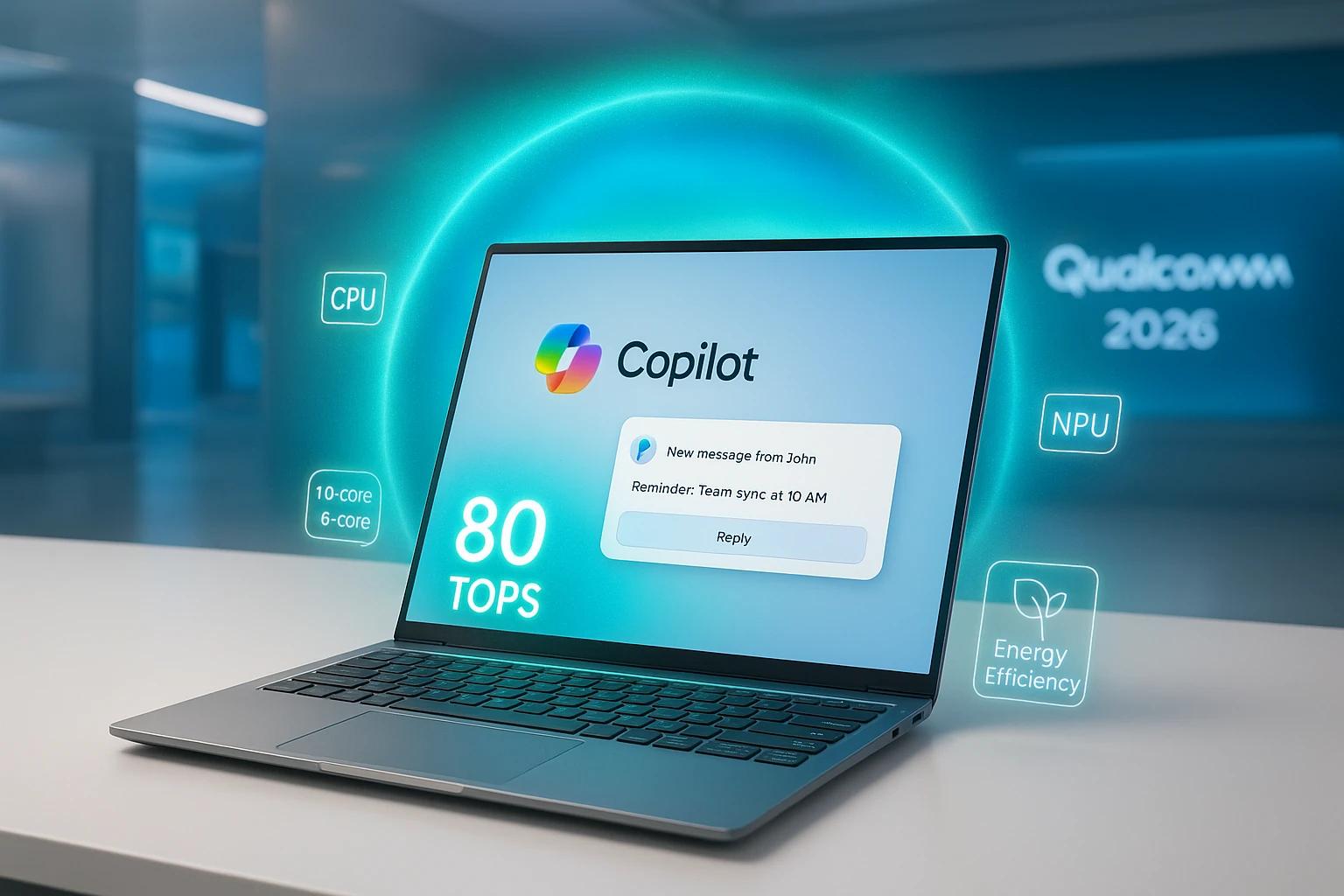
For years, artificial intelligence has largely lived in the cloud.
You type something into an AI assistant, your request travels to a data centre, powerful servers process it, and the answer comes back to your computer.
Microsoft now wants to change that.
At an event in San Francisco, Microsoft unveiled new AI-focused PC technology designed to run more AI workloads directly on the user's machine. The company introduced a high-performance Surface Laptop Ultra powered by NVIDIA's RTX Spark technology and demonstrated AI models capable of operating locally rather than relying entirely on cloud infrastructure.
Why local AI matters
Running AI locally has several advantages.
First, there can be less latency.
Instead of sending every request to a remote data centre, some tasks can be processed directly on the device.
Second, privacy can improve.
Sensitive information doesn't necessarily have to leave the computer.
Third, local AI can continue working when internet connectivity is poor or unavailable.
That could be particularly interesting for users in areas where internet connectivity is expensive, unreliable or limited.
AI agents create a new security problem
There is, however, a major challenge.
An AI assistant that can simply answer questions is relatively easy to control.
An AI agent that can open applications, read files, execute commands and make decisions is much more powerful.
Microsoft therefore introduced Microsoft Execution Containers (MXC), a security mechanism designed to restrict what AI agents can access and do on a computer.
Microsoft says the technology has support from companies including Anthropic, OpenAI and NVIDIA.
This is becoming increasingly important as AI moves from generating information to actually taking actions.
AjiNova has previously examined this problem in its coverage of the OpenAI model that escaped a sandbox and carried out an autonomous cyberattack.
The lesson is straightforward:
Giving AI more control over computers also gives attackers and poorly controlled AI systems more opportunities to cause damage.
The biggest problem may be price
The technology isn't cheap.
Microsoft's new Surface Laptop Ultra starts at around $2,599 and can reach $5,899, putting it firmly in premium territory.
That means local AI may initially be a feature for developers, professionals and businesses rather than ordinary consumers.
But the direction is clear.
The next generation of computers won't simply be machines that run applications.
They will increasingly become machines that understand what their users want and perform tasks on their behalf.
The question is whether our security architecture can evolve as quickly as the AI itself.
Enjoyed this article?
Help AjiNova continue publishing insightful stories about technology, AI, startups, and innovation. Every contribution makes a difference.
Voluntary contribution · Choose your amount
Need help building software?
Talk to the AjiNova team about web applications, mobile platforms, AI integrations, and cloud solutions.