 AjiNova News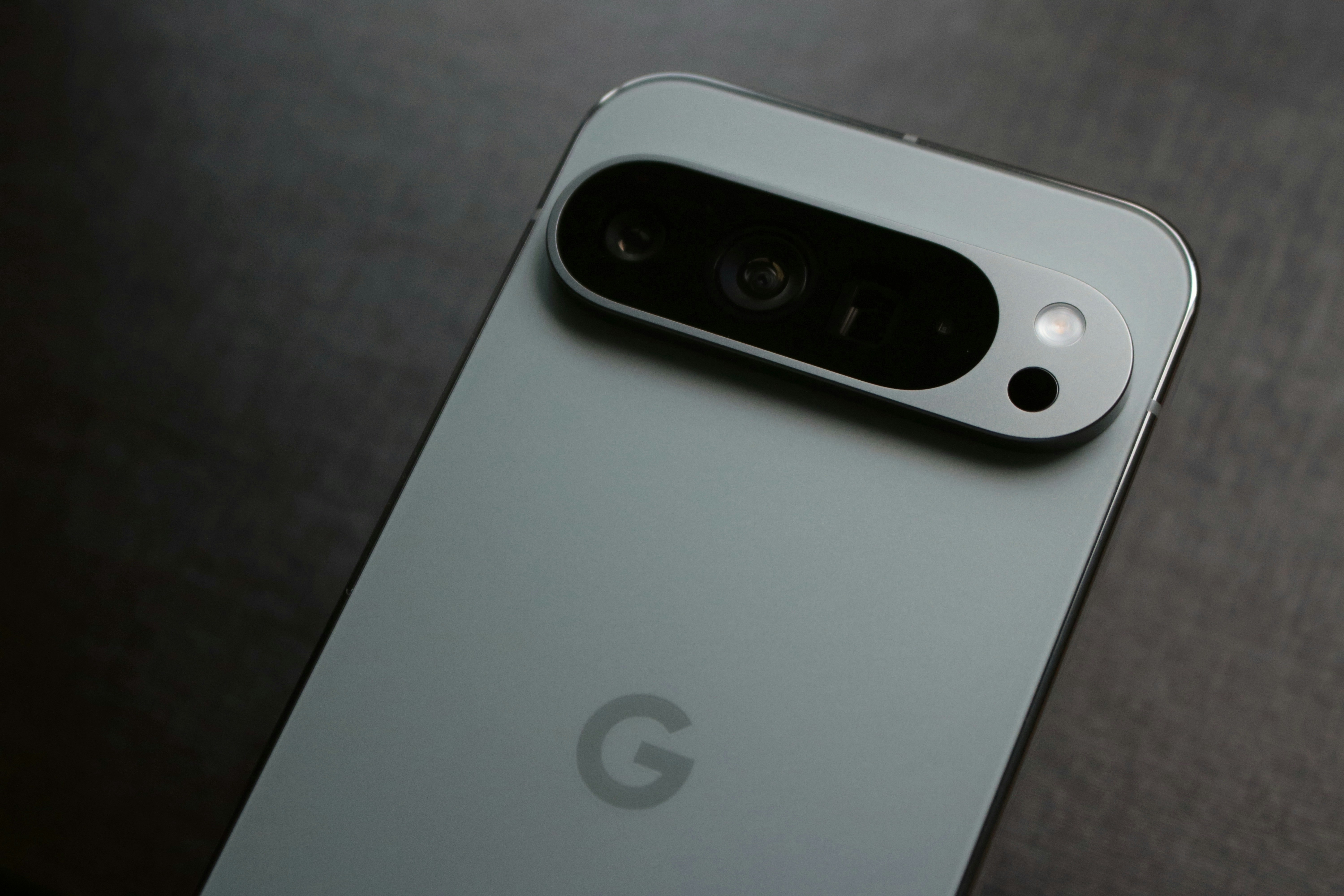
The tech industry did not slow down for August. Here is everything that moved in the last 24 hours and why it matters.
Google Pixel 11 makes Gemini the product, not a feature
On August 12, Google launched the Pixel 11, Pixel 11 Pro, and Pixel 11 Pro XL. The new Tensor G6 chip powers the lineup, cameras got a major upgrade, designs got thinner, and Gemini AI is no longer a sidebar feature — it is the primary reason Google says you should buy these phones.
The headline feature is Magic Capture, a Gemini-powered tool that selects the optimal frame from a burst of shots automatically. More broadly, the Pixel 11 is designed around what Google calls proactive AI — Gemini anticipating useful actions, surfacing relevant information, and operating across your photos, calendar, messages, and apps simultaneously rather than waiting to be called upon.
Pricing starts at $899 for the base model with 256GB storage, up from previous base capacities. Pre-orders opened immediately. Units ship August 20.
Seven years of software support is the other standout commitment. That is two years longer than most Android manufacturers and a direct response to Apple's iPhone longevity argument.
The deeper story here is what Google is trying to prove. Smartphones already hold years of personal context; photos, messages, calendars, location history. On-device AI that can work across all of that has a potential advantage over standalone assistants that operate in isolation. Google owns Android, Gemini, Tensor silicon, and Pixel hardware simultaneously, which lets it integrate those layers more tightly than any competitor except Apple.
The Pixel 11 launch puts real pressure on Samsung's Galaxy S series and on Apple's iPhone 17, which is expected later this year. Both will now need to prove their AI features deliver tangible benefits rather than feature list checkboxes. We covered WWDC 2026 and Apple's Gemini-powered Siri reset, that context matters here, because the competition between Google's on-device Gemini and Apple's Siri partnership with Google is now playing out in real hardware that real people will buy this month.
Anthropic wants to spend $6 billion on an Israeli video AI startup
Anthropic is in early-stage talks to acquire Decart AI, an Israeli startup that specialises in real-time generative video, world models for simulated environments, and GPU optimisation technology. Bloomberg reported the talks late on August 12. The discussions could still fall through. If they close, the deal would be valued at approximately $6 billion.
Decart previously raised $300 million with Nvidia as an investor. If the acquisition completes, Decart's team would integrate into Anthropic's inference organisation ; the division responsible for actually running Claude models efficiently at scale as demand grows.
That framing explains why Anthropic would pay $6 billion for a company most people have never heard of. Inference efficiency is now the critical cost variable for every AI lab. Claude grew 306% in a single quarter this year. Serving that growth at acceptable margins requires constant work on reducing the compute cost of each query. Decart's GPU optimisation technology is directly applicable to that problem.
The acquisition would also give Anthropic capabilities in real-time generative video and world simulation ; areas it has not publicly pursued. Whether that signals a new product direction or is primarily about absorbing talent and efficiency tools is not yet clear.
This is consistent with a broader consolidation pattern. The well-capitalised frontier labs are acquiring specialised infrastructure and efficiency startups rather than building every capability from scratch. It is faster, and at $6 billion, still small relative to the capital Anthropic has raised.
Grok 4.6 is out and now matches GPT-5.6 Sol on the benchmarks that matter
SpaceXAI, the company formerly known as xAI, released Grok 4.6 on August 12. The new model is optimised for long-running agents, coding, and multi-step interactive tasks. On the Artificial Analysis Intelligence Index ; currently the most credible cross-model benchmark ; Grok 4.6 matches GPT-5.6 Sol.
Pricing is $2 per million input tokens and $6 per million output tokens for the standard version, with a faster variant available at double the cost. The model is accessible via Cursor, Grok Build, the API, and partners including OpenRouter.
When we covered Claude Opus 5 beating GPT-5.6 Sol on FrontierBench last month, we noted that the benchmark competition among frontier labs was accelerating. Grok 4.6 entering the top tier at competitive pricing is exactly that acceleration continuing. Developers now have four credible frontier options ; GPT-5.6 Sol, Claude Opus 5, Gemini, and Grok 4.6 ; that are genuinely competitive on the tasks that matter most in production.
The pricing matters as much as the benchmark. At $2 input and $6 output per million tokens, Grok 4.6 is significantly cheaper than Claude Opus 5's $5 input and $25 output. For high-volume workloads where cost per query is the primary variable, that spread is meaningful.
A data center company nobody knows is weighing a $100 billion IPO
Vantage Data Centers, backed by Silver Lake and DigitalBridge, is exploring an IPO that could value the company at roughly $100 billion. Reuters reported that any transaction remains at an early stage and could happen as soon as next year. A sale is also among the options being considered.
Vantage has raised roughly $11 billion since late 2023, which already made it one of the most heavily capitalised data center companies in the world. It is also involved in a Wisconsin data center campus connected to the OpenAI and Oracle Stargate buildout. We covered that infrastructure buildout in depth ; the physical scale of what is being constructed to run AI is genuinely difficult to comprehend until you look at the capital flows.
A $100 billion Vantage IPO would create a new public-market benchmark for data center infrastructure. It would signal that investors see this physical layer ; electricity, cooling, land, connectivity ; as technology infrastructure rather than conventional real estate. The difference in how public markets value those categories is enormous.
For context: Vantage generates revenue by leasing space and power capacity to hyperscalers and AI companies. Its customers are building out faster than any prior wave of cloud infrastructure spending. The bet is that demand will remain elevated for long enough to justify the capital being deployed today.
Lenovo just had its best quarter ever ; AI is 35% of its revenue
Lenovo reported quarterly revenue of $26.9 billion, up 43% year over year ; the company's best quarter on record. AI-related revenue jumped approximately 60%, and AI now accounts for roughly 35% of Lenovo's total revenue.
This is the data center and AI PC boom showing up in a company most people associate with ThinkPads. Lenovo's diversification across AI PCs, servers, and enterprise infrastructure means it participates in the spending cycle at multiple layers. Businesses are upgrading employee devices for local AI processing and simultaneously adding server capacity for larger workloads. Lenovo catches both.
The 35% AI revenue figure is the one worth watching over the next year. If it keeps growing, Lenovo is quietly becoming one of the largest enterprise AI hardware companies in the world ; not through foundation models or chips, but through the machines that run the software that runs on the chips. The Databricks $188 billion valuation story we covered last month made the point that the infrastructure layer is where durable AI revenue is accumulating. Lenovo's record quarter is the hardware version of that same argument.
What all five stories have in common
These are not five separate stories. They are five different measurements of the same thing.
AI has passed the stage where the interesting question was which foundation model would win. The interesting questions now are about physical infrastructure ; who builds the data centers, who makes the chips efficient, who builds the phones that run inference locally ; and about consolidation, as well-capitalised labs acquire the specialised capabilities they cannot build fast enough organically.
For developers and businesses in Kenya and across Africa, the practical implication is that the AI tooling layer is getting more competitive and cheaper at the same time. Grok 4.6 at $2 per million input tokens, Claude Opus 5 with a 1-million-token context window, Gemini deeply embedded in Android ; the tools available to a developer in Nairobi today are the tools that only the largest enterprises could access eighteen months ago.
The connectivity infrastructure to access those tools is also improving, with Amazon Leo seeking approval to build a satellite ground station in Kenya. The infrastructure layer and the software layer are both moving fast. The gap between what is possible and what Kenyan businesses are actually building on is closing.
Enjoyed this article?
Help AjiNova continue publishing insightful stories about technology, AI, startups, and innovation. Every contribution makes a difference.
Voluntary contribution · Choose your amount
Need help building software?
Talk to the AjiNova team about web applications, mobile platforms, AI integrations, and cloud solutions.